
Why Kling 4.0 Became Our Default AI Video Generator
AI video generation has quietly become a default step in many creative workflows rather than an experimental extra. When a team needs a quick motion test, a storyboard proof, or a short social cut, the decision is less about whether to use a model and more about which one to reach for first.
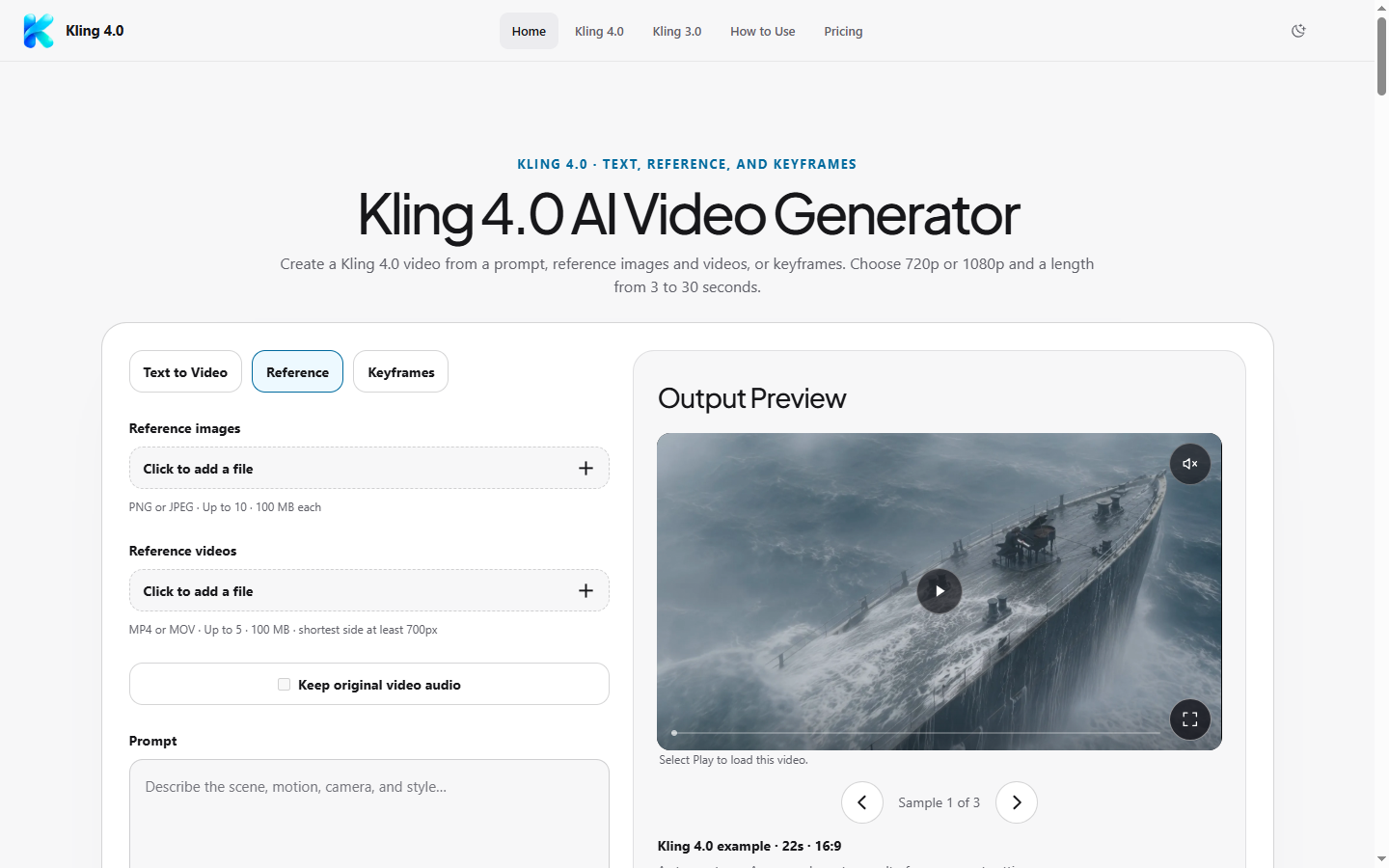
For our recent production work we standardized on Kling 4.0 as the primary engine. According to the product page, the model emphasizes prompt adherence and temporal consistency, which matters when a character, product, or camera move needs to stay coherent across a multi-shot sequence.
Where it changed our previsualization
Before, a 10-second previs meant booking render time and waiting. Now the same brief can be drafted as a text prompt, reviewed as a clip, and revised in the same session. That loop shortens the distance between an idea and a decision, which is the part of production that actually costs money.
How it sits inside a pipeline
We treat the tool as one stage rather than the whole pipeline. Source references and shot lists go in first, the model produces candidate clips, and a human editor trims and composites the keepers. Keeping a person in the loop preserves brand consistency while still removing the slowest manual steps.
Practical notes before you adopt it
A few things are worth planning for: prompt structure matters more than length, reference frames help lock identity, and short clips are easier to compare than long ones. According to the product page, the workflow is built around iterating on small, reviewable outputs, which fits teams that already review dailies.
Prompt patterns that worked
We keep prompts to a single clear action, one subject, and one environment. Overloading a prompt with competing motions tends to dilute the result. Feeding a reference image for the subject, then describing the camera, gave the most stable identity across frames.
Measuring whether it is worth it
The honest test is turnaround, not novelty. If a model lets a draft move from brief to review in under an hour, it earns a place in the stack. For our use, this model landed in that bucket, which is why it became the default rather than an occasional experiment.
Рекомендовані статті